


1 What is the best time for a holiday in Thailand?

The best time to holiday in Thailand is during the dry and hot season, from mid-November to the end of April.
The least amount of rain falls in February and March, with daytime temperatures around 30°C (86°F). That said, Thailand enjoys warm and pleasant weather year-round, making it a great destination in any season.
If you’re flexible with your time and budget and want to maximize your chances of perfect weather, I recommend planning your trip in February or March. These months typically have the lowest chance of rain and the most sunshine.
Of course, the weather can be unpredictable, and no one can guarantee what it will be like next week or next month.
Even during the rainy season, Thailand remains a popular destination. You can expect occasional rainfall, but monsoon showers are usually brief. In southern Thailand, daytime temperatures still hover around 27–29°C (80.6–84.2°F). The wettest months are generally June and September.
READ ALL ABOUT THAILAND HERE: WHAT IS THE BEST TIME TO TRAVEL TO THAILAND
2 WHEN IS THE RAINY SEASON IN THAILAND?
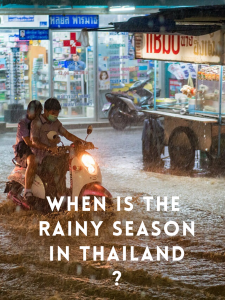
The rainy season in Thailand begins at the end of May and lasts until October.
The wettest months are typically June and September. Even during this season, average temperatures remain warm, ranging between 27–32°C (80.6–89.6°F). The amount of rainfall can vary greatly depending on whether you’re on Thailand’s east or west coast.
Weather in the tropics is famously unpredictable — no one can accurately forecast it even an hour ahead, let alone days in advance. Monsoon showers are usually short but intense, often occurring in the afternoon or overnight.
Don’t waste your time checking weather apps while you’re in Thailand — they’re notoriously unreliable. Most online weather forecasts show rain or cloudy skies every single day, even during the dry season when the sky can stay blue and sunny for weeks. The default weather app on your iPhone, for example, is almost always wrong.
3 DO I NEED TO SHOW ANY MONEY WHEN ENTERING THAILAND ?

You may be required to show proof of sufficient funds when entering Thailand. According to the ThaiImmigration Acteffective from 19th February 2010, anyone arriving in Thailand can be asked to present proof of cash. If you enter as a tourist with a Visa on Arrival, you might need to show 20,000 Baht per person or 40,000 Baht per family.
Immigration officials may ask you to prove that you have enough money to cover your stay. The cash doesn’t have to be in Thai Baht — it can be in your home currency, US dollars, euros, or an equivalent amount.
This rule applies to everyone entering Thailand as a tourist. You must carry the cash physically at the point of entry — don’t rely on finding an ATM before immigration.
In addition to cash, immigration officers can also randomly request to see your accommodation reservation (at least for the first few days), a return ticket, and your travel insurance.
If you cannot prove sufficient funds, you risk being refused entry or having your visa canceled. These checks are random, so even if the officers didn’t check those ahead of you, they can still ask you.
4 DO I NEED AN INTERNATIONAL DRIVING LICENSE TO DRIVE IN THAILAND?
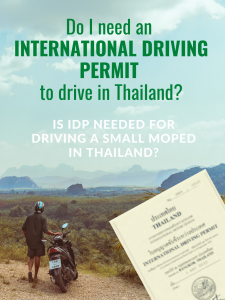 You must have a valid International Driving Permit (IDP) to drive legally in Thailand. To ride a small moped or motorbike, you need an IDP with category A (small motorbike). Without a valid IDP, you are not legally allowed to drive in Thailand.
Motorcycle accidents are the leading cause of fatalities in Thailand, so it’s strongly advised not to drive without a valid IDP.
Thailand only recognizes the “A” category for motorbikes — no subcategories are accepted. If you are involved in a traffic accident without an “A” category license, even if the accident is not your fault, you could face serious consequences. You may be responsible for all damages and medical costs, for yourself and others involved.
Driving without a valid license also means you won’t be covered by insurance in case of an accident.
Although many scooter rental companies may rent you a motorbike based on your passport alone, renting or driving without a proper license is illegal. If you choose to do so, you do so at your own risk and responsibility.
5 What vaccination should I get before coming to Thailand?

Recommended Vaccinations for Travel to Thailand
Basic recommended vaccinations for Thailand include Hepatitis A and B, and Typhoid Fever. It’s also important to check the validity of your Tetanus vaccination before traveling. Additional vaccines, such as Rabies, may be recommended depending on the nature and duration of your trip.
Hepatitis A: Can be vaccinated separately with two doses spaced at least 6 months apart, providing long-term protection.
Hepatitis A and B: There is also a combined vaccine requiring three doses (two doses before departure), offering long-term protection.
Hepatitis B: Can be vaccinated alone with three doses. After completion, protection is long-lasting, likely lifelong.
Typhoid Fever: One vaccine dose provides protection for about 3 years. Revaccination is done only if necessary.
Please note that these travel vaccinations are recommended but not mandatory for entry into Thailand.
7 Can I use IQOS electronic cigarettes in Thailand?
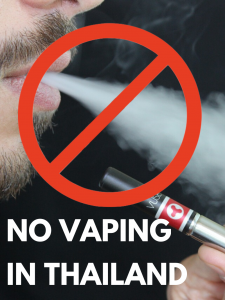
Electronic cigarettes, including IQOS and similar devices, are strictly prohibited in Thailand. Since November 2014, importing, exporting, and selling electronic cigarette products and cartridges is illegal under Thai law. Violators face fines up to THB 20,000 and/or imprisonment for up to 10 years.
Both tourists and locals have been fined or arrested in recent years for possession or use of electronic cigarettes. It is strongly advised not to bring or use any e-cigarette devices while in Thailand.
8 Do u leave a tip in Thailand?
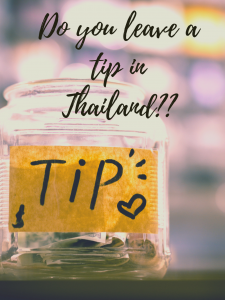
Tipping is not mandatory in Thailand. Whether or not you leave a tip is entirely your choice. While tipping is not expected or enforced, a small tip is always appreciated as a kind gesture.
If you enjoyed your food or received good service, a small tip will be warmly welcomed. Personally, when my husband and I travel in Thailand, we often leave tips to show our appreciation.
At restaurants, a tip of around 10% to 15% of the bill is considered generous.
If you want to tip hotel staff, drivers, boat captains, or others, it’s best to give a banknote, for example, 100 THB. Avoid giving coins or small bills like 20 THB, as these may be seen as a joke or even insulting.
9 Can I bring home seashells from Thailand?
It is illegal to export seashells, corals, bones, dried butterflies, skulls, teeth, tiger claws, and many other natural souvenirs from Thailand. This includes shells and corals collected from the sea, those washed ashore, or those already made into souvenirs.
Customs regulations worldwide prohibit importing many such items without proper documentation, especially if they come from endangered animal or plant species protected by international laws like CITES (the Convention on International Trade in Endangered Species).
If you try to bring these items back without the required permits, they will be seized, and you could face investigations, hefty fines, or even imprisonment. Food supplements containing parts of protected plants or animals are also prohibited.
In Thailand, park rangers in national parks have the authority to fine or penalize anyone caught removing or damaging corals, shells, or other natural objects. These rules are enforced even before you reach customs.
Besides being illegal, removing shells or pebbles from beaches harms the environment. If every tourist took something home, the beaches would quickly lose their natural beauty.
Please help protect Thailand’s nature by leaving these treasures where they belong.
10 Should I exchange money before going to Thailand?
It’s usually best to wait and exchange your money after you arrive in Thailand.
There are plenty of currency exchange shops everywhere—at airports, in towns, and at your final destination—so it’s easy to convert your money once you’re here.
At Bangkok Suvarnabhumi Airport, the best exchange rate is usually found at the SuperRich exchange office in the basement.
You’ll also find ATMs all over Thailand. Keep in mind, most ATMs charge a 220 THB fee per withdrawal.
On the islands, exchange rates might not be as favorable as on the mainland, so plan accordingly.
If your home currency is less common, it’s a good idea to exchange it for USD or Euros before traveling and then convert to Thai Baht once you arrive.
11 how to protect yourself from mosquitoes in Thailand?
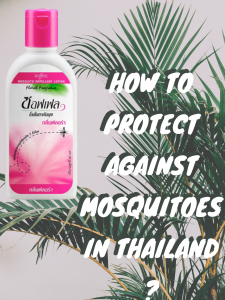
The most effective mosquito repellent in Thailand is the popular Thai brand SOFFELL (ซอฟเฟล). It comes in both cream and spray forms and is widely available at supermarkets, 7-Eleven, Tesco Lotus, pharmacies, and more. It costs around 60–70 THB.
For extra protection, especially in your hotel room, you can also use an electric plug-in mosquito repellent.
Since Thailand has a tropical climate, mosquitoes are present all year round. Some people naturally attract them more than others, so it’s important to protect yourself — especially during the rainy season when mosquito breeding increases, or if you plan to go trekking in the jungle.
12 Do I need travel insurance to visit Thailand??
Travel insurance is an absolute must when visiting Thailand—or traveling abroad anywhere. You never know what might happen during your trip, and going without insurance would be risky and unwise. In fact, proof of travel insurance may be required upon entering Thailand.
We recommend checking out World Nomads for instant quotes and great deals. Besides covering your health, travel insurance can also protect your valuable equipment—like cameras, phones, or laptops—from theft or damage, which is especially useful if you carry expensive electronics with you.

Can You Haggle in Thailand? Yes—But Do It Right

Yes, you can haggle in Thailand, but always with common sense and respect for the seller. Bargaining is common in local markets and street stalls, especially when buying clothes, souvenirs, or accessories. However, you should not bargain in places like proper shops, restaurants, food stalls, or bars—these usually have fixed prices.
Some travel blogs say that “you must bargain or you’ll offend the seller”, but that’s not really true. Most Thai vendors won’t be offended if you simply agree to the first price—so don’t feel pressured to haggle if you’re comfortable with what they’re asking.
If a seller offers you a discount after your first counter-offer, don’t continue pushing for an even lower price. Either accept the deal or thank them politely and walk away. It’s also good to avoid offering ridiculously low prices, which can be considered rude or embarrassing.
💡 Example: If a vendor offers a T-shirt for 500 THB, it’s usually reasonable to bargain it down to around 300 THB—but not 100 THB.
14 Can i fly drone in Thailand?
If you plan to fly a drone in Thailand, it’s important to know that all drones weighing more than 250 grams or equipped with a camera must be registered with Thai authorities. Flying a drone here is legal but involves a complex, time-consuming, and costly registration process — so it’s usually only practical for long-term visitors or professionals.
Since 2019, drone registration at police stations is no longer possible. Instead, you must obtain the following documents to fly legally:
Registration with the Civil Aviation Authority of Thailand (CAAT)
Registration with the National Broadcasting and Telecommunications Commission (NBTC)
Drone insurance
Temporary drone import license (not required if you bought your drone in Thailand)
Detailed step-by-step registration instructions can be found here.
Key Regulations from CAAT:
Register all drones with cameras or weighing 250g or more.
Drones over 25 kg must register with the Ministry of Transport.
Drone operators must keep the drone within visual line of sight at all times.
Drones cannot fly near airports, helipads, or within 9 km of an aerodrome without a special permit.
Maintain a horizontal distance of at least 30 meters from people, vehicles, and buildings.
Flying indoors requires permission.
Maximum flight altitude is 90 meters.
Flying drones without a permit is banned in central Bangkok and most marine national parks.
Penalties:
Flying a drone without NBTC registration: fine up to THB 100,000 (~$3,150) and possible imprisonment up to 5 years.
Flying without CAAT registration: fine up to THB 40,000 (~$1,250) and possible 1-year imprisonment.
Authorities actively monitor drone-related social media and may blacklist offenders or confiscate drones at the border.
15 Should I pre-book my accommodation in Thailand?

The immigration officer might ask you to show proof of accommodation booked for at least the first few days of your holiday. It is not mandatory to pre-book your entire stay in Thailand, but having a reservation ready can help smooth your entry process.
When Should You Definitely Book Ahead?
There are a few situations where pre-booking your accommodation is highly recommended:
You have a fixed travel itinerary and already know exactly where you want to stay.
You plan to visit a small island or remote location with limited accommodation options.
You are traveling during the peak season (December through February).
You will be in Thailand during major holidays such as Christmas, New Year, Songkran (Thailand’s New Year on April 13), Chinese New Year (early February), or Loy Krathong Festival (mid-November).
If you already have your flight tickets and travel dates, booking your accommodation early ensures a wider selection of hotels, especially in popular tourist areas and smaller islands.
If you’re traveling off-season and prefer a more spontaneous trip, you can often find accommodation easily after arrival, but be prepared that your options might be more limited.
16 Can I buy SIM card with internet data in Thailand?
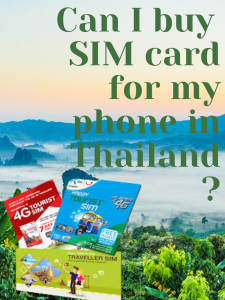
You can easily buy a SIM card for your phone at the airport, any 7-Eleven, or local phone shops. Mobile SIM cards in Thailand are very affordable and usually activate within minutes. For about 400 THB (around $12), you can get 4GB of mobile data valid for 30 days. The most common providers are TrueMove, Dtac, and AIS.
Whether you’re in the city or on the islands, you can purchase a Thai SIM card at 7-Eleven stores, phone shops, or various market stalls. To buy a SIM card, you will need to show your passport for registration.
The easiest method is to download the provider’s app on your phone and choose your preferred data package online. You can also ask for assistance at the point of sale. Select a plan from the current price list, and the staff can help you swap your SIM card and activate it on the spot.
Since prices and packages change frequently, it’s best to pick your tariff once you arrive in Thailand to get the most up-to-date deals.
17 Can I bring any alcohol or cigarettes to Thailand?

You are allowed to bring a maximum of one liter of spirits, liqueurs, or wine per person into Thailand. Additionally, you may bring up to 200 cigarettes, or 250 grams of tobacco (including cigars), or a combination of tobacco products weighing up to 250 grams.
18 Do I have to carry my passport with me in Thailand?
 By law, you are required to carry your passport with you at all times while in Thailand. Before traveling, ensure your passport is valid for at least six months from your date of entry. Also, check that your passport has at least one blank page, as this is necessary for immigration stamps.
It’s a good idea to scan or photograph important documents such as your passport, travel insurance, and driver’s license. Keeping digital copies on your phone provides extra security in case the originals get lost.
While it’s rare to be asked for ID on the beach, not having any proof of identification can lead to arrest, so always keep your passport or an official ID on hand.
19 What is the fee and withdrawal limit for ATMs in Thailand?
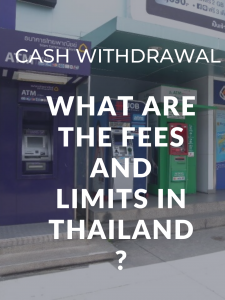
ATM withdrawal fee in Thailand is currently 220THB. The maximum withdrawal value is different in each bank, the most common limit is 20,000 THB per day. Krungsi Yellow Bank has a higher limit of 30,000 THB. Pay attention when withdrawing cash. In Thailand, the cash comes out first, then followed by the card. Don’t put your money in the pocket and walk away from ATM without your bank card.
You can also make a withdrawal from your account inside of the bank with your passport and bank card. Do not forget to notify your bank about your travel abroad.
I recommend using ATMs outside of the bank (if there is a bank where you are located). In case the card gets accidentally stuck inside or there is any problem, the bank staff can help you.
20 Can I travel to Thailand if I don't speak English?

You don’t need to speak English or Thai fluently to enjoy your holiday or backpacking trip in Thailand. Having some basic English helps, but it’s not absolutely necessary.
To make things easier, buy a tourist SIM card with data as soon as you arrive. This will give you internet access to use online apps, translators, and Google Maps.
If your language skills aren’t strong, I recommend printing out all your bookings, tickets, and transfers beforehand. You can then simply show these documents at the airport, ferry ports, or to taxi drivers. Booking your accommodation online in your own language before you arrive will also save you from any language hassles while in Thailand.
21 How to get rid of an upset stomach in Thailand?
 To get rid of an upset stomach in Thailand do the following:
Visit the nearest pharmacy (there’s one on almost every corner) and explain your symptoms. Pharmacists can provide effective medication for diarrhea or vomiting without a prescription.
Stay hydrated! Buy electrolyte powders like Electrolyte or OREDA at pharmacies or 7/11 stores to replenish lost minerals. Fresh coconut water is also a great natural hydrator.
If diarrhea lasts more than 48 hours or your condition worsens, see a clinic or hospital immediately. Health services in Thailand are generally very good, and clinics will often coordinate with your insurance company for treatment.
Most pharmacists speak good English. If you have trouble communicating, use these Thai words:
“rok thong ruang” (โรค ท้องร่วง) = diarrhea
“ua” (อ้วก) = vomiting
Prevention tips to avoid the “Thai belly”:
Drink only bottled water and use it to brush your teeth.
Eat thoroughly cooked food—meat, fish, and veggies.
Wash your hands regularly and use antibacterial gel.
Take probiotics before and during your trip to protect your digestive system from harmful bacteria.
22 Should I leave my passport as a deposit when renting a scooter in Thailand?
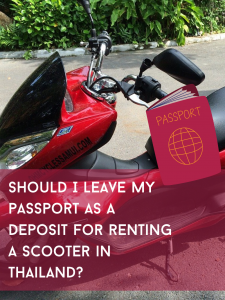
Never leave your passport as a deposit. By law, you must carry your passport with you at all times in Thailand.
If the rental company insists on a passport deposit, offer a cash deposit instead—around 5,000 THB for motorbikes, and for cars, between 10,000–20,000 THB is typical. Also provide a copy of your passport.
If they refuse the cash deposit, just walk away and find another rental company.
A safer alternative is to rent a motorbike through your hotel or hostel, as they already have your documents on file.
Before you rent:
Take clear photos of the motorbike from all angles, noting any scratches, dents, or paint damage.
Document these defects on the rental agreement and get it signed by the company.
Why? Some rental scams involve companies charging you for damages that were already there. Protect yourself by having proof!
23 Is it safe to drive in Thailand?
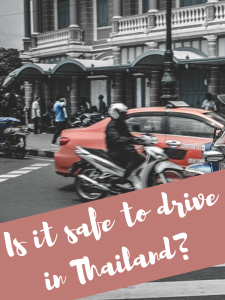
Driving in Thailand is notoriously challenging and requires your full attention at all times. If you have any doubts about your motorbike riding skills, do not drive a motorcycle here. Even experienced riders find Thailand’s traffic and road conditions tricky and sometimes dangerous.
Key safety tips:
Always check the condition of the tires before you ride.
Wear a helmet without fail.
Watch out for bends and curves, where there may be windblown sand or gravel from nearby beaches.
Be aware that many drivers do not follow traffic rules and can cause accidents unexpectedly.
Thailand consistently ranks among the countries with the highest fatal road accident rates in the world—so don’t underestimate the risks.
Road conditions and clothing:
Islands like Koh Tao and Koh Chang have particularly narrow, winding roads that can become very slippery and dangerous after rain.
Avoid riding a motorbike in a swimsuit or inappropriate clothing — it’s both unsafe and you risk severe sunburn or injury if you fall.
Wear clothing that offers some protection and keeps you safe from the sun.
Legal requirements:
Driving a motorbike legally in Thailand requires a valid Group A international driving license (see #4 for more info).
If you’re unsure about driving:
Consider using cars, taxis, tuk-tuks, Grab, or public transport instead.
Although it may cost more, your safety is priceless, and avoiding driving stress is worth the extra expense.
Zero tolerance:
There is absolutely no tolerance for alcohol or drug use when driving in Thailand.
Why rent a vehicle at all?
Having your own transportation gives you freedom to explore hidden beaches, fishing villages, and secret viewpoints that most tourists miss.


